How we work
The whole stack, in one place.
Sensing, firmware and the models are one problem, not three. Splitting them across suppliers is how a wearable ends up technically correct and practically useless.
Board design, firmware, machine-learning models, companion software and the test rigs that check them. Keeping the layers together is what lets us trade a milliamp of power against a percent of accuracy and know what we are giving up.
Rails measured, timing captured on the scope, firmware stepped through under the microscope, then jumped. We would rather find a limit ourselves and publish it than have a customer find it in the air.
Each new device starts from a stack that has already been proven rather than from nothing. That is what makes it realistic for a company our size to take on hardware at all — and what will make the second product faster than the first.
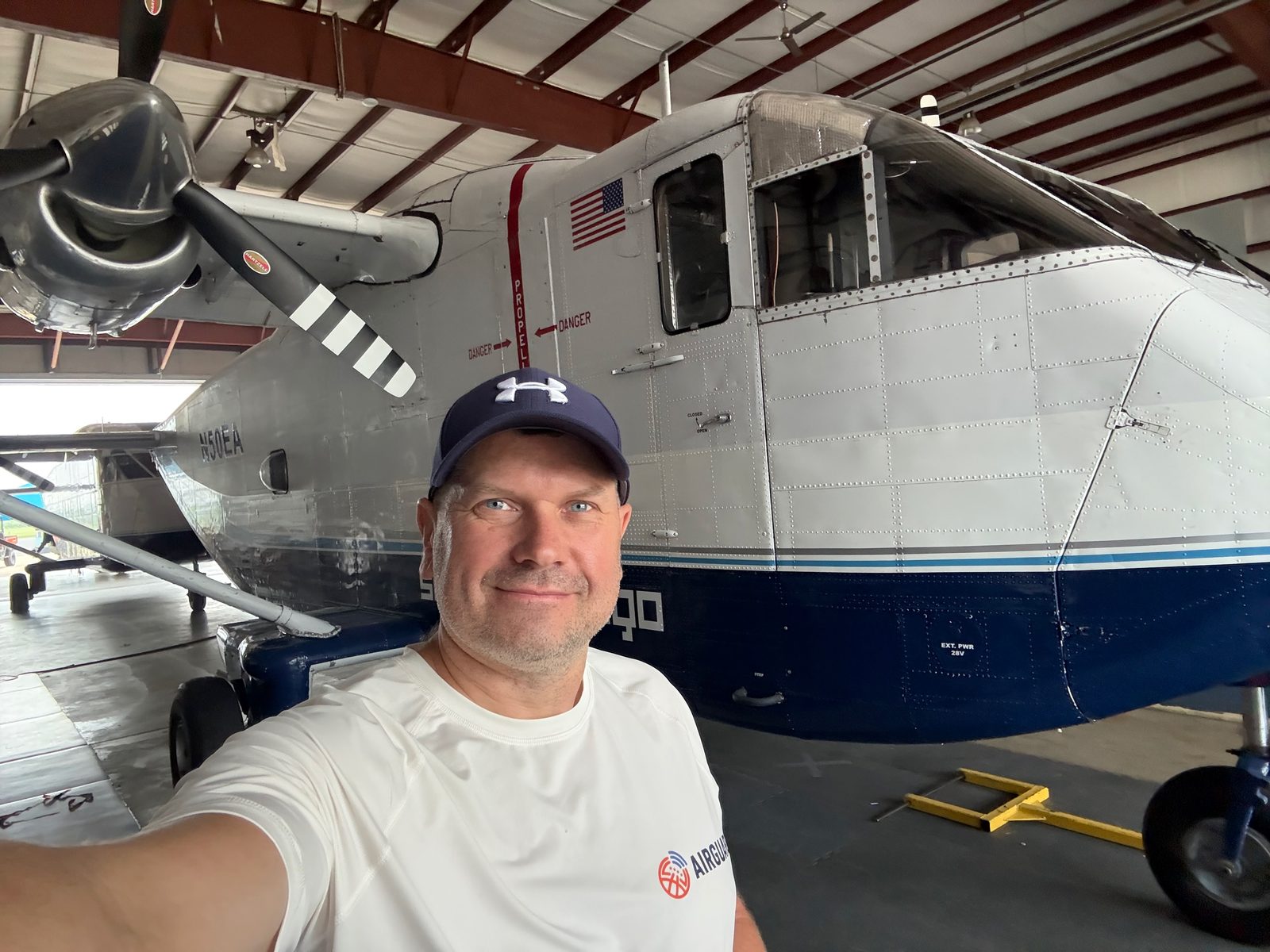
Founder
Andrey Baykov
Aerospace engineer, FAA-certificated remote pilot and skydiving-equipment manufacturer. Before Quanta Sphere he spent years building software under FDA scrutiny at Johnson & Johnson MedTech, where a defect is not a bug report — that is where the testing culture in this company comes from.
He also jumps. Every device we build gets tested on his own rig before it gets tested on anyone else’s, which is a reasonable standard for equipment whose whole purpose is to be trusted in the air.
He is working toward his private pilot certificate (PPL) at Wings of Carolina Flying Club, and learning aircraft maintenance alongside it. Not a hobby kept separate from the work: the equipment we build lives in an aviation environment, and understanding that environment from the cockpit and the maintenance hangar — not only from under a canopy — changes what you think to design for.
Where we are going
Extreme sports first, because it is the hardest case.
If sensing and prediction work at freefall speed, in cold and wet, on a power budget that has to last a full day of jumping, the same stack has room to spare almost anywhere else. That is the plan: prove it where it is hardest, then take it to the places where the stakes are quieter but no less real.
Skydiving and canopy flight, where the margin for a late warning is measured in seconds.
Mountain, water and motor disciplines with the same problem shape: remote, fast, poorly covered.
Lone workers and independent living, where the sensing is the same and only the thresholds change.